Weight Tracker
Catch weight changes before they become problems.
SuggieHub tracks your sugar glider's weight over time with per-glider charts, a 4-week rolling average, and automatic concern flags calibrated to life stage. A two-gram drop might be nothing. It might not be. The chart tells you which.
Start tracking for free →
What it does
Weight tracking that thinks in trends, not snapshots
A single weight reading tells you very little. A glider that weighed 112g last week and 109g this week could be fine — they might have eaten less the day before the weigh-in. Or that three-gram drop could be the start of a pattern. You can only tell the difference when you're looking at the whole picture.
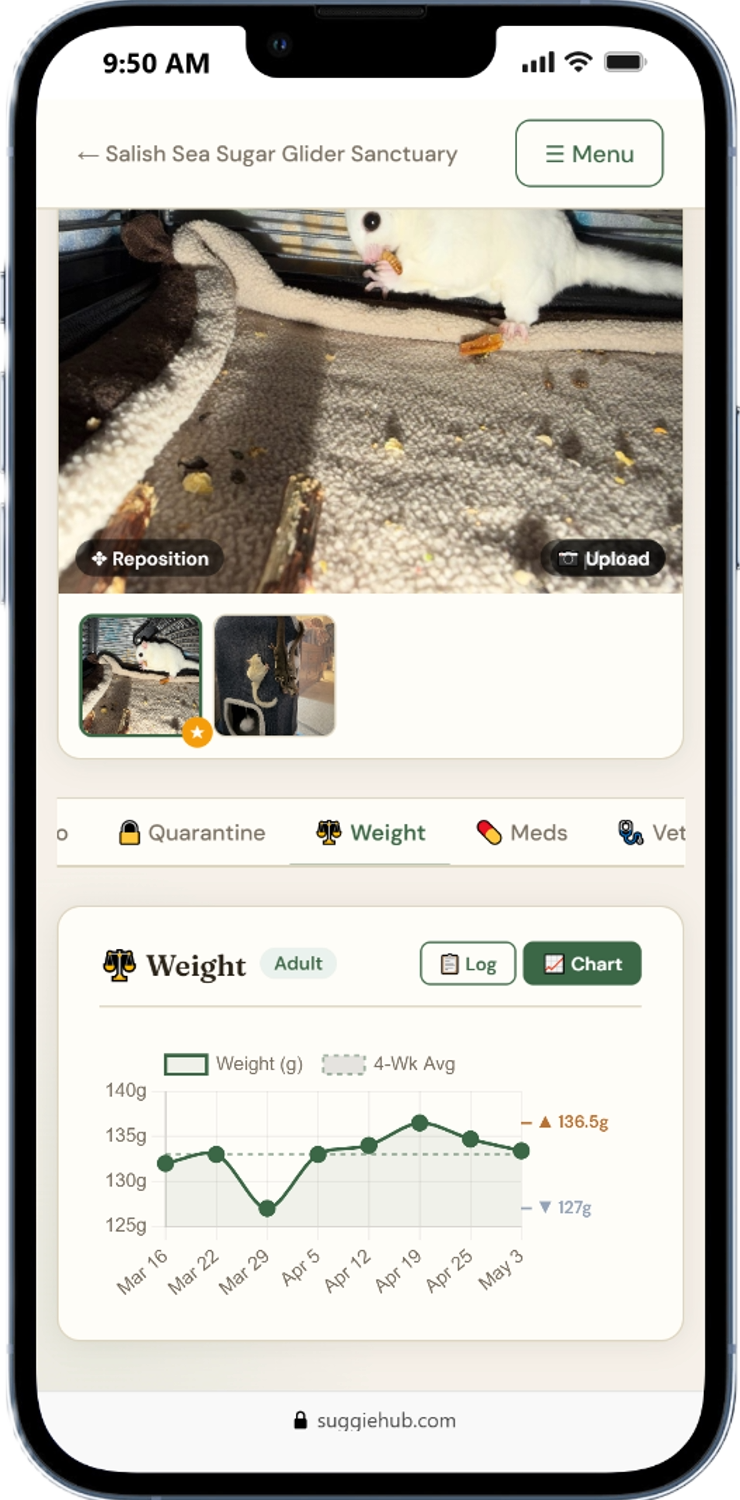
SuggieHub keeps the whole picture. Every time you log a weight for a glider, it's added to their personal weight history and their chart updates immediately. The chart plots every entry over time and overlays a 4-week rolling average line — a smoothed view of the trend that filters out the normal day-to-day variation and shows you what's actually happening.
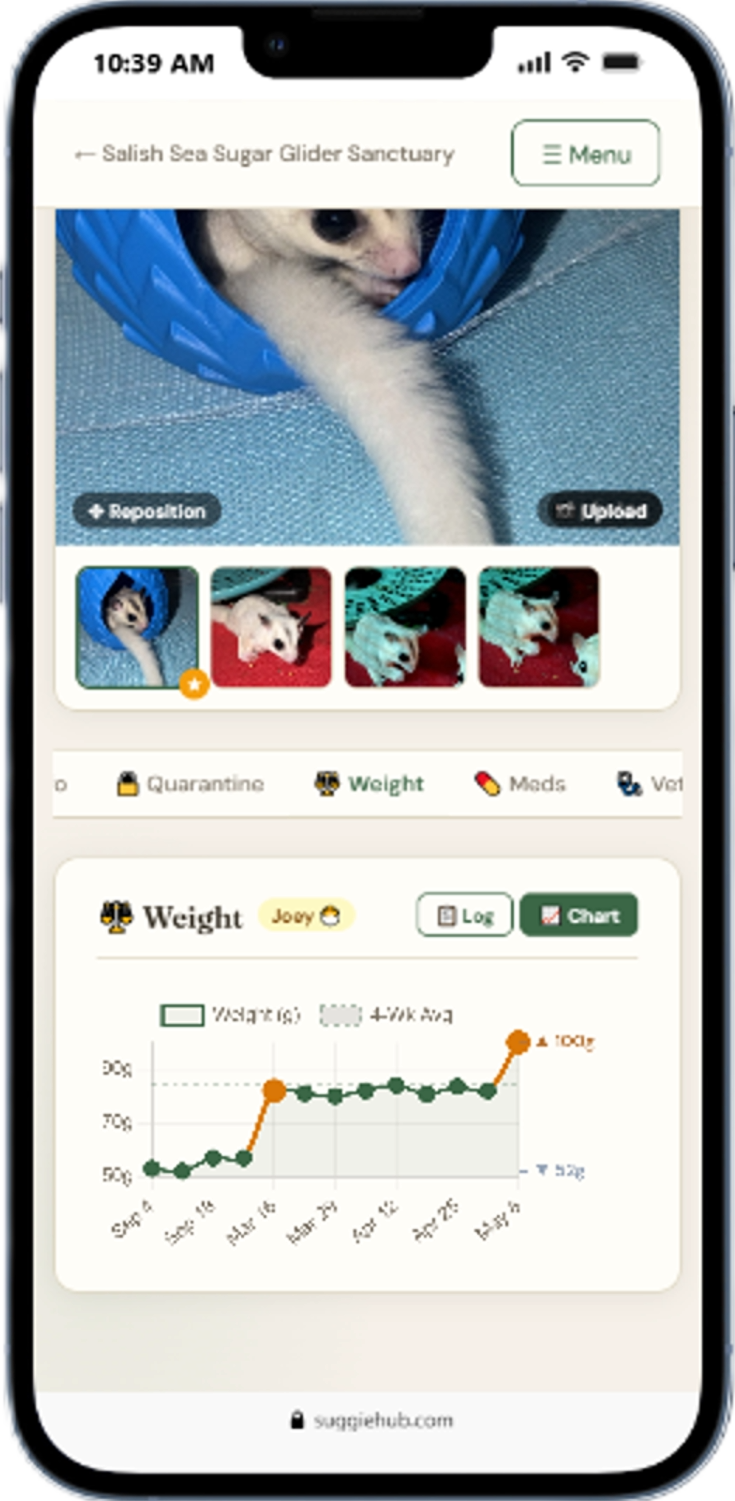
When that rolling average drops past a threshold, SuggieHub flags it as a concern. The thresholds aren't one-size-fits-all: joeys (under 6 months) are held to stricter standards because weight instability is more serious when they're still developing, and seniors get adjusted thresholds that account for natural changes in body composition over time. The concern flag appears on the weight chart and on the glider's card in the journal home.
Logging weights is fast. Open the weight section for any glider, enter the number, and save. If you weigh your colony regularly, you might also use the bulk weigh-in feature to enter weights for every glider on one page — but even individual entries take seconds. Gliders you've already weighed today show a grey Save button so you can see at a glance where you are in your session. It's a visual reminder only — you can still update the weight if you need to correct an entry.
| Life stage | Typical weight range | Notes |
|---|
| Joey (birth to 6 months) | Variable — rapid growth | In-pouch and newly OOP development; a joey not gaining weight consistently in this window is at high risk for developmental failure |
| Young adult (6–12 months) | 60–130g depending on sex | Reaching sexual maturity and final adult weight; track weekly |
| Adult female (1–6 years) | 75–130g | Maintain stable personal baseline; normal range varies with diet and season |
| Adult male (1–6 years) | 100–160g | Males typically heavier; bald spot weight variation normal |
| Senior (6+ years) | Individual baseline | Monitor for age-related muscle mass loss; adjusted thresholds; focus on change from personal baseline |
Weight ranges above are general community references. Your glider's healthy weight is their personal baseline — consult an exotic-animal vet for guidance specific to your animal.
Why it matters
Weight is the earliest warning sign you have
Sugar gliders are masters at hiding illness. They evolved as prey animals in environments where showing weakness meant death, and that instinct didn't disappear in captivity. A glider who is quietly losing weight, not eating well, or conserving energy to fight something off will look and behave completely normally to most casual observation — until they don't. By the time a sugar glider looks sick, they are often very sick.
Weight is the exception to this masking behavior. A glider can't hide a declining number on a gram scale. Regular weekly weighing, combined with a system that tracks the trend and flags meaningful changes, gives owners a window into what's happening before any visible symptoms appear. Catching a five-gram drop in week two — instead of a fifteen-gram crash in week six — is the difference between a vet visit for early intervention and an emergency triage situation.
The 4-week rolling average matters because weight fluctuates normally for all kinds of reasons: meal timing, hydration, seasonal cycle activity, and the chaos of just being a sugar glider. Looking at any single weigh-in in isolation can lead to either panic over nothing or false reassurance. The rolling average filters all of that out and shows you what's actually trending. That's the number that should drive action, and SuggieHub makes sure it's always visible.
See it in action
The chart that catches what you'd miss
The weight chart shows every entry plotted over time with the rolling average overlay. Concern flags appear directly on the chart at the data point where the threshold was crossed — so you can see exactly when the pattern started, not just that a flag exists now.